Last updated: May 3, 2026. The definitive 2026 buyer’s guide for procuring commercial cleaning services for medical offices, healthcare facilities, dental practices, urgent care centers, and ambulatory surgery centers across Connecticut, Rhode Island, and southern Massachusetts.
Medical office cleaning is fundamentally different from standard office cleaning. The vendor needs OSHA bloodborne pathogen training, EPA-registered hospital-grade disinfectant chemistry, color-coded microfiber for cross-contamination prevention, CDC-aligned cleaning sequences, accreditation-survey documentation, and HIPAA-aware crew training. Skipping any one of these creates real patient-safety, accreditation, or regulatory risk.
This guide is written by Fraser Commercial Services, the Waterford, CT-based commercial cleaning company that services medical practices, urgent care centers, dental offices, and ambulatory surgery centers across our 60-mile service radius. We wrote this guide for practice managers, office managers, facilities directors, and operations leads who are evaluating cleaning vendors for the first time or rebidding an existing program.
1. What makes medical cleaning different
Standard office janitorial cleans surfaces. Medical office cleaning reduces pathogen load on surfaces that patients and clinical staff touch. The defining requirements:
EPA-registered hospital-grade disinfectants
Not the same as a “cleaner that disinfects.” EPA hospital-grade disinfectants have been laboratory-tested against specific pathogens (TB, HIV, MRSA, C. diff, etc.) and have a documented kill claim and dwell time on the EPA registration label. The cleaning vendor must use the right product for the right pathogen, applied with the correct dwell time. Spray-and-wipe with an unspecified product is not disinfection.
Dwell time discipline
Every EPA-registered disinfectant has a “dwell time” — the time the product must remain visibly wet on the surface to actually kill what it claims to kill. Common dwell times range from 30 seconds to 10 minutes depending on the chemistry and the pathogen target. Skipping dwell time is the single most common medical-cleaning failure. Crews must be trained to apply, walk away, and not wipe the surface dry too soon.
OSHA bloodborne pathogen training
Required for any worker with reasonably anticipated occupational exposure to blood or other potentially infectious materials. Annual recertification. Vendors should have current training records on file for every cleaner assigned to clinical-space cleaning.
Color-coded microfiber
Different colored microfiber cloths assigned to different zones (red for restrooms, blue for office areas, yellow for low-risk patient touch surfaces, green for kitchen, etc.). Prevents cross-contamination between zones. Standard practice; vendors who do not use color-coded cloths are doing it wrong.
CDC-aligned cleaning sequences
The order of cleaning matters. Always clean to dirty (clean low-risk surfaces first, then progressively dirtier areas), top to bottom (high surfaces first, then mid, then floors), dry to wet (dry dust before wet cleaning). Crews must be trained in sequencing and must not backtrack to “touch up” a clean area after handling a dirty one.
HIPAA-aware crew training
Cleaning crews work in spaces that contain patient information: appointment lists left on counters, charts in exam rooms, computer screens left on, paperwork at the front desk. Crews must be trained to never read, photograph, remove, or relocate patient information. If a document is in the way of cleaning, the crew leaves it where it is and notes it for the practice manager.
Accreditation survey documentation
Joint Commission, AAAHC, AAAASF, CMS, and state health department surveyors will ask for cleaning logs, terminal-cleaning sign-offs, chemical SDS sheets, and training records. The cleaning vendor must produce this documentation on request, indexed by date and area.
2. Scope of work varies dramatically by facility type
Primary care and family medicine practices
Standard scope. Exam rooms, waiting room, restrooms, front desk, break room, supply rooms. Typical 5 nights per week, 4-8 exam rooms, 2 to 3 cleaners per visit. EPA hospital-grade disinfection of all touch points, color-coded cloths, end-of-day cleaning logs.
Dental practices
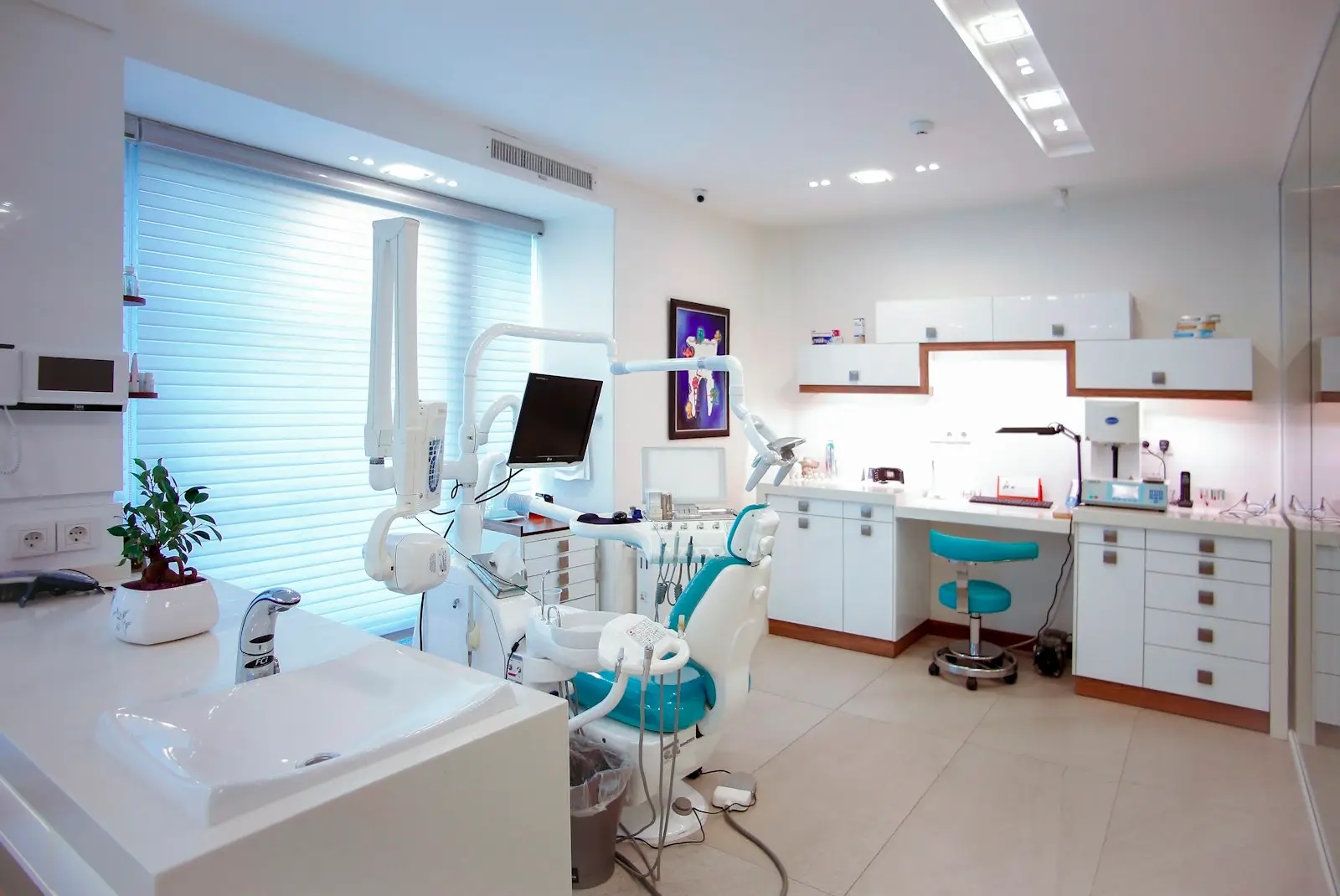
Similar to primary care but with operatory-specific requirements. Dental chairs, suction lines, x-ray equipment exteriors, sterilization area, lab area. Crews do not touch sterilized instruments or instrument trays. Cleaning happens after the dental staff has performed their own end-of-day operatory disinfection.
Urgent care centers
Higher patient throughput than primary care. Higher restroom traffic, more frequent waiting room reset, more cleaning of public touch points (door handles, kiosk screens, payment terminals). Often configured with day-porter coverage during business hours plus nightly deep clean.
Dialysis and infusion centers
Chair-by-chair sanitization between patient appointments (typically performed by clinical staff, with the cleaning vendor handling overnight deep clean). Biohazard handling protocols for any spill events. Strong color-coded discipline.
Ambulatory surgery centers
Pre-op, post-op, and recovery area protocols. Operating rooms cleaned by clinical staff during the day; cleaning vendor handles surrounding common areas, restrooms, waiting rooms, locker rooms. Terminal cleaning of recovery rooms after patient discharge.
Behavioral health and mental health practices
Discretion is the defining requirement. Often after-hours-only access. No interactions with patients or family members in waiting areas. Crews trained not to discuss what they observe.
Specialty practices (dermatology, ophthalmology, ENT, etc.)
Specialty exam equipment requires care. Crews trained to clean around equipment without touching it. Specialty surfaces (slit lamps, exam chairs, etc.) are typically wiped by clinical staff, not the cleaning vendor.
3. Compliance and documentation requirements
Medical office cleaning vendors must maintain documentation that satisfies accreditation surveyors and supports the practice’s own compliance program. The standard package:
- OSHA bloodborne pathogen training records for every cleaner assigned to clinical-space cleaning. Annual recertification.
- EPA disinfectant SDS sheets for every chemical used on-site, indexed by chemical name and UN number.
- Cleaning logs per visit, per area (exam rooms, restrooms, waiting room, etc.), with crew member sign-off.
- Terminal-cleaning sign-offs for any room cleaned after a patient discharge or biohazard event.
- Color-coded equipment documentation showing which microfiber colors are assigned to which zones.
- HIPAA awareness training records for every cleaner.
- Background check verification on file for every cleaner with facility access.
- General liability insurance certificate with the practice named as additional insured.
- Bonding documentation.
- Walk-through reports on a defined cadence (monthly minimum, often quarterly) signed by the supervisor.
4. Pricing benchmarks for medical office cleaning in CT, RI, and southern MA
| Practice size | Frequency | Typical 2026 monthly cost |
|---|---|---|
| Small practice (2,000-3,500 sq ft) | 5 nights/week | $900 to $1,500 |
| Standard practice (3,500-6,000 sq ft) | 5 nights/week | $1,500 to $2,800 |
| Larger practice (6,000-10,000 sq ft) | 5 nights/week | $2,500 to $4,500 |
| Multi-specialty clinic (10,000+ sq ft) | 5 nights/week + day porter | $5,000 to $10,000 |
Medical office cleaning typically runs 15 to 25 percent above standard office janitorial rates due to OSHA training, EPA-registered chemistry, color-coded equipment, accreditation documentation, and additional supervision required.
5. Project services that pair with medical programs
- VCT strip and wax on clinical hallways and exam-room floors, annually. Strict scheduling around practice hours.
- Carpet hot-water extraction on waiting room and office carpets, annually. Often scheduled during practice closures.
- Window cleaning interior on glazing and partition glass, quarterly.
- Restroom deep descale and re-grouting biannually.
- Post-incident electrostatic disinfection after any reported infectious-disease exposure event. Typically priced per visit.
6. How to write a medical office cleaning RFP
Beyond the standard RFP sections, medical office RFPs should specifically include:
- Facility profile by area type: exam rooms (count), waiting area sq ft, restrooms (count), specialty spaces (lab, x-ray, sterilization, etc.), staff break room
- Practice type: primary care, urgent care, dental, dialysis, surgery, behavioral health, etc.
- Accreditation: Joint Commission, AAAHC, AAAASF, CMS, state health department
- Specific compliance requirements: HIPAA awareness training, OSHA bloodborne pathogen training, accreditation-survey documentation
- Color-coded microfiber requirement (yes, mandatory)
- Dwell-time discipline: require vendor confirmation that crews are trained on EPA dwell-time requirements
- Documentation requirements: cleaning logs per visit, terminal-cleaning sign-offs, SDS sheets on file, training records on file
- Reporting cadence: monthly walk-through reports minimum, quarterly accreditation-readiness reviews
- References: minimum three current medical clients of similar size and type
For a copy-paste base RFP that you can customize for a medical practice, see our Free Commercial Cleaning RFP Template.
7. How to evaluate a medical cleaning vendor
The standard 10-question scorecard, plus three medical-specific dimensions:
- EPA-registered chemistry depth. Can the vendor name (and produce SDS sheets for) the specific EPA-registered hospital-grade disinfectants they use, with documented dwell times for each?
- OSHA training currency. Are bloodborne pathogen training records current (within 12 months) for every cleaner who would be assigned to your practice?
- Accreditation experience. Have they supported clients through Joint Commission, AAAHC, AAAASF, or CMS surveys before? Can they provide a reference from one?
For the standard scorecard, see our Vendor Evaluation Scorecard.
8. Switching cleaning vendors at a medical practice
- Notify the current vendor in writing per contract terms (typically 30 days). Coordinate the last-shift date carefully.
- Walk the practice with the new vendor’s supervisor BEFORE the transition night. Document equipment, supply inventory, and any practice-specific quirks (after-hours-only access, HIPAA-sensitive areas, specialty equipment).
- Confirm the new vendor’s bloodborne pathogen training records are current for the assigned crew BEFORE first shift.
- Schedule transition for a Friday or Saturday night, giving the new vendor the weekend to get the practice right before staff arrive Monday.
- Have the practice manager on-site for the first transition night.
- Set a 14-day check-in and a 30-day formal review.
- Brief surveyor-readiness documentation transfer if mid-accreditation cycle.
Frequently asked questions about medical office cleaning
Do cleaning vendors clean exam rooms?
Yes. Exam rooms are part of the standard medical office cleaning scope. Touch points (counters, exam tables, chairs, sinks, faucet handles, door handles, light switches, exam light handles, computer monitor frames) are EPA-disinfected with proper dwell times every cleaning visit. Crews do not touch medical equipment that the practice has not specifically authorized.
How often should medical office restrooms be cleaned?
EPA hospital-grade disinfection of all touch points should happen every cleaning visit (typically nightly). High-traffic practices benefit from day-porter restroom check-ins every 1 to 2 hours during patient hours.
Are cleaning crews allowed in patient rooms after hours?
For outpatient practices: yes. After business hours, exam rooms are empty and cleaning happens overnight. For inpatient or extended-hours facilities: cleaning happens around the patient or during specific scheduled windows.
What if a cleaner sees a patient document on a counter?
Trained crews leave it where it is and note it for the practice manager. They do not read it, move it, photograph it, or otherwise interact with it. This is part of HIPAA awareness training.
Can the same vendor handle our urgent care AND our primary care practices?
Yes, if they are equipped for both. The compliance requirements are similar; the operational rhythm differs (urgent care has higher throughput and more public touch points). Multi-practice contracts often consolidate billing and supervision under one supervisor.
Are cleaning supplies included in the price?
Most medical office contracts include disinfectant, soap, paper, sanitary, hand sanitizer, and trash liners. Some practices prefer to supply their own to control specific brands or sustainability standards. Either model works; just be explicit in the scope.
About Fraser Commercial Services
Fraser Commercial Services is a 39-year-old, family-run, veteran-owned commercial cleaning company headquartered in Waterford, CT. We service medical practices, dental offices, urgent care centers, and ambulatory surgery centers across our 60-mile service radius. Our crews are OSHA bloodborne pathogen trained, equipped with color-coded microfiber, and use EPA-registered hospital-grade disinfectants with documented dwell times.
Helpful resources
- Medical Office and Healthcare Facility Cleaning Services
- Free RFP Template
- Vendor Evaluation Scorecard
- Pricing Cheat Sheet
- Cost Calculator
- Commercial Cleaning Glossary
- The Complete Guide to Commercial Cleaning in CT and RI (2026)
Procuring cleaning for your medical practice or healthcare facility? Call (860) 373-2525 or request a free walkthrough. Written quotes within two business days. OSHA-compliant, HIPAA-aware crews.